admin
admin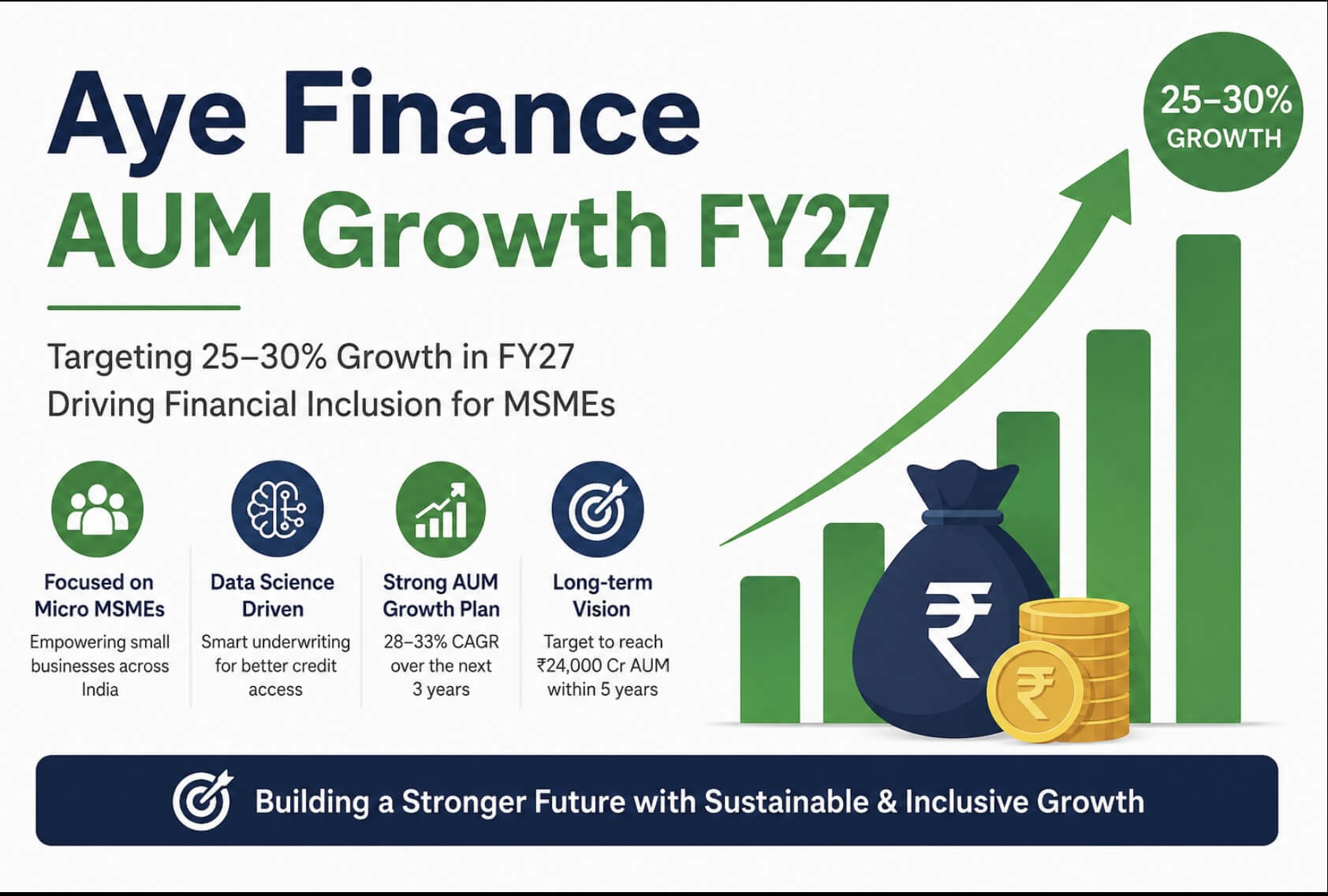
Aye Finance AUM Growth FY27: Complete Investor Analysis
Aye Finance AUM growth is gaining strong attention as the company targets 25–30% expansion in FY27. This growth strategy is built around lending to underserved micro MSMEs using data-driven underwriting models. For investors, understanding Aye Finance AUM growth is critical to evaluating long-term returns, risk exposure, and scalability.
But numbers alone don’t tell the full story.
This article goes beyond headlines to break down:
- What is driving this growth
- Whether it is sustainable
- Key risks investors should watch
- Long-term valuation potential
Business Model Overview
Aye Finance operates in a niche but rapidly expanding segment:
Core Focus:
- Micro-scale MSMEs
- Small shop owners, traders, manufacturers
- Businesses often ignored by traditional banks
Key Differentiator:
- Data science-driven underwriting
- Uses alternate data instead of traditional credit scores
Why This Matters:
- India has 6+ crore MSMEs
- Over 70% lack formal credit access
- Huge untapped lending opportunity
AUM Growth Targets: What They Really Mean
Management Guidance:
- FY27 AUM growth: 25–30%
- 3-year CAGR: 28–33%
- 5-year target: ₹24,000 Cr AUM
Growth Breakdown (Estimated)
| Year | Estimated AUM (₹ Cr) | Growth Rate |
|---|---|---|
| FY26 | 10,000 (assumed base) | — |
| FY27 | 12,500–13,000 | 25–30% |
| FY28 | 16,000–17,000 | 28–33% |
| FY29 | 21,000–23,000 | 28–33% |
| FY31 | ~24,000 | Long-term target |
Key Insight:
This is not just growth — it is compounding at scale.
If executed well, Aye Finance could 2–2.5x its loan book in 4–5 years.
Revenue and Profitability Potential
NBFC growth is meaningful only if:
- Yield remains high
- NPAs are controlled
- Cost of capital stays stable
Revenue Drivers
- High interest rates (18–26% typical in micro loans)
- Short tenure loans → faster capital recycling
- High demand for working capital
Profitability Levers
- Better underwriting → lower defaults
- Tech-driven cost reduction
- Scale → lower operating cost per loan
Margin Outlook
| Factor | Impact |
| High yield loans | Positive |
| Credit risk | Negative |
| Tech efficiency | Positive |
| Funding cost | Moderate risk |
Insight:
Margins can remain strong if credit quality is controlled.
Industry Opportunity: Why MSME Lending Is Exploding
India’s MSME sector is entering a credit expansion phase.
Structural Growth Drivers
- Formalization (GST, digital payments)
- Government push for MSMEs
- Supply chain financing demand
- Digital lending ecosystem growth
Market Size
- MSME credit gap: ₹20–25 lakh crore
- NBFCs are gaining share from banks
Key Insight:
Aye Finance is operating in a massive, underpenetrated market.
This supports long-term high growth.
Competitive Positioning
Aye Finance competes with:
- Small finance banks
- Fintech lenders
- Other MSME-focused NBFCs
Strengths
- Strong rural + semi-urban presence
- Deep customer understanding
- Data-driven underwriting
Weaknesses
- Smaller balance sheet vs large NBFCs
- Higher credit risk segment
Competitive Edge
- Focus on “thin-file customers”
- Localized credit assessment models
- Faster loan disbursement
Insight:
Its niche focus gives pricing power, but also higher risk exposure.
Risk Analysis: What Investors Must Watch
High growth always comes with risks.
1. Credit Risk (Biggest Risk)
- Customers are micro businesses
- Vulnerable to economic shocks
Impact:
- Rising NPAs can destroy profitability
2. Economic Slowdown
- MSMEs are first to get hit
- Cash flow disruptions → defaults
3. Funding Risk
- NBFCs depend on borrowing
- Rising interest rates → margin pressure
4. Regulatory Risk
- RBI tightening NBFC norms
- Capital adequacy requirements may increase
5. Over-Expansion Risk
- Rapid growth may reduce underwriting quality
Key Insight:
Growth above 30% must be carefully monitored.
Valuation Perspective
If Aye Finance achieves:
- 30% CAGR
- Stable NPAs
- Strong ROA (2.5–3%)
Potential Outcome
- Valuation can re-rate significantly
- Could become a mid-sized NBFC leader
Investor View
| Scenario | Outcome |
| Strong execution | Multibagger potential |
| Moderate growth | Stable compounder |
| High NPAs | Value destruction |
Future Outlook (2026–2031)
Bull Case
- MSME boom continues
- Digital lending scales fast
- AUM crosses ₹24,000 Cr early
Base Case
- Growth stabilizes at 25%
- Moderate NPAs
- Steady profitability
Bear Case
- Credit cycle turns negative
- High defaults
- Growth slows below 15%
Final Insight:
Aye Finance is a high-risk, high-growth NBFC play.
Strategic Insight for Investors
When This Works Best:
- Expanding economy
- Strong MSME demand
- Stable interest rates
When It Fails:
- Credit cycle downturn
- Poor underwriting discipline
- Liquidity crunch
Actionable Investor Takeaways
- Track AUM growth vs NPA trends
- Monitor cost of funds
- Watch collection efficiency
- Check capital adequacy ratio
Conclusion
Aye Finance’s ambitious AUM growth targets are backed by a strong structural opportunity in MSME lending. However, this is not a simple growth story.
It is a credit cycle story.
If management balances:
- Growth
- Risk
- Profitability
Then Aye Finance can emerge as a powerful compounding NBFC over the next decade.
But if credit quality slips, the same growth can quickly turn into a problem.
Final Verdict
- ✅ Strong growth potential
- ⚠️ High credit risk
- 📈 Suitable for long-term investors with risk appetite
Disclaimer: This article is for educational purposes only and not financial advice. Investors should do their own due diligence before investing.
Disclaimer: The projections of potential returns are based on current market conditions and company performance. Actual results may vary due to various factors, including market dynamics, economic conditions, and changes in the competitive landscape. Investors should conduct their own research and consult with financial advisors before making investment decisions.
Multibagger Stocks breakout stocks
⚠️ Not SEBI Registered—just here to share insights | 🚫 No paid services—everything shared is entirely free! 🧠 Always Learning and excited to grow together in this journey of market exploration.
📲 Join Our Investor Communities
🔹 Join our Telegram Channel: Multibagger Hunts
🔹 Join our WhatsApp Channel: Click to Join
✅ Free access
✅ Instant alerts
✅ Curated research for serious investors
TwitterXWhatsAppThreadsTelegramFacebookLinkedInGmailEmailShare