admin
admin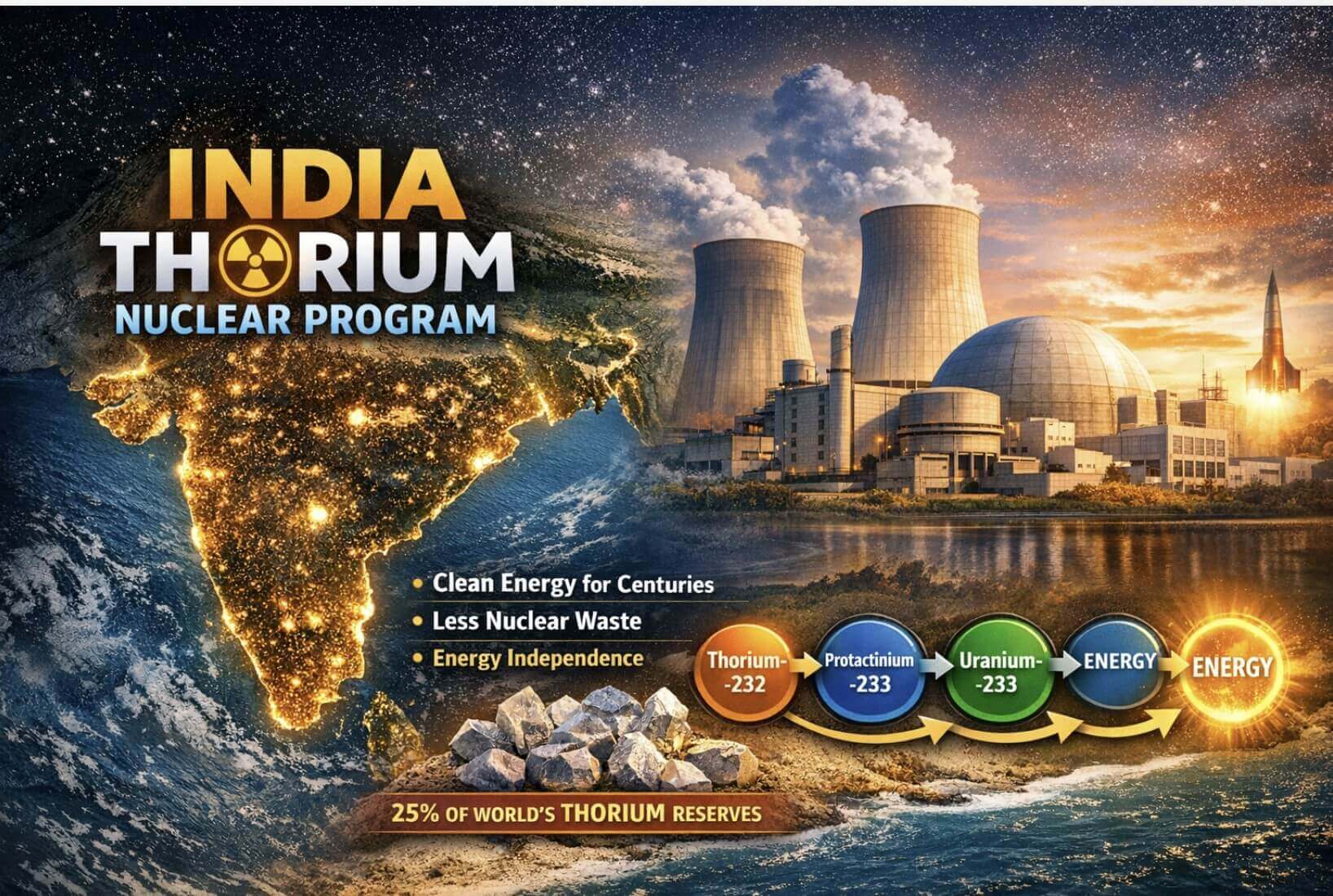
India Thorium Nuclear Program: How a 70-Year Strategy Could Power India for Centuries
The India Thorium Nuclear Program is one of the most ambitious long-term energy strategies in the world. With limited uranium but massive thorium reserves, India has built a unique 3-stage nuclear roadmap that could power the nation for centuries. The recent breakthrough in the Prototype Fast Breeder Reactor (PFBR) marks a critical step forward in this vision.
The Core Problem: India’s Energy Reality
India faces a unique challenge in energy security.
Limited Uranium, Massive Thorium
- India holds only ~1–2% of global uranium reserves
- But possesses ~25% of the world’s thorium reserves
This imbalance created a fundamental question:
👉 How can India build long-term nuclear energy security without relying on imported uranium?
Unlike countries rich in uranium, India needed a completely different strategy.
The Visionary Plan: India’s 3-Stage Nuclear Program
In the 1950s, nuclear physicist Homi Jehangir Bhabha designed one of the most ambitious energy strategies in history.
Goal
- Convert abundant thorium into usable nuclear fuel
- Achieve long-term energy independence
- Build a self-sustaining nuclear ecosystem
No other country attempted such a long-term, multi-stage nuclear roadmap.
Stage 1: Pressurised Heavy Water Reactors (PHWRs)
What India Did
India started with PHWR reactors using natural uranium.
How It Works
- Fuel: Natural uranium
- Output:
- Electricity
- Plutonium (as a by-product)
Why It Matters
- India didn’t need enriched uranium
- Built a strong base of nuclear infrastructure
- Generated plutonium needed for Stage 2
Key Insight
This stage was not just about power—it was about fuel creation for the future.
Stage 2: Fast Breeder Reactors (FBRs)
This is where India’s nuclear strategy becomes truly unique.
What Makes FBRs Special
- They produce more fuel than they consume
- Act as “fuel multipliers”
Fuel Used
- Plutonium + Uranium
Output
- More plutonium
- Higher efficiency fuel cycle
🚨 Big Milestone: PFBR Achieves Criticality (April 2026)
India’s Prototype Fast Breeder Reactor (PFBR) at Kalpakkam has officially reached criticality.
What “Criticality” Means
- Self-sustaining nuclear chain reaction has begun
- Reactor is now operational at a fundamental level
Why This Is Huge
- India has officially entered advanced Stage 2
- Validates decades of nuclear R&D
- Opens pathway to large-scale fuel multiplication
Strategic Impact
- Reduces dependency on imported nuclear fuel
- Accelerates transition to thorium economy
Stage 3: The Thorium Revolution
This is the ultimate goal of India’s nuclear program.
The Challenge
Thorium cannot directly produce energy.
The Solution
Thorium must be converted into fissile material:
Transformation Process:
- Th-232 → Th-233 → Pa-233 → U-233 → Energy
Why Thorium Is a Game-Changer
1. Massive Energy Potential
- India’s thorium reserves could power the country for hundreds of years
2. Lower Nuclear Waste
- Produces less long-lived radioactive waste
3. Enhanced Safety
- Lower risk of meltdown in certain designs
- More stable nuclear reactions
4. Reduced Weapons Risk
- Less suitable for nuclear weaponization
Where India’s Thorium Lies
India’s thorium is primarily found in monazite sands along coastal regions:
- Kerala
- Tamil Nadu
- Odisha
- Andhra Pradesh
These deposits make India one of the richest thorium nations globally.
Reality Check: Challenges Ahead
Despite the promise, thorium energy is not an immediate solution.
Key Challenges
- Technology still under development
- High capital costs
- Complex fuel cycle
- Limited global expertise
Timeline
- Large-scale thorium deployment likely post-2050
Global Context: Why the World Is Watching India
Most countries rely on uranium-based reactors.
India stands alone in seriously pursuing a thorium-based nuclear economy.
Why This Matters Globally
- Could redefine nuclear energy economics
- Provide a blueprint for sustainable energy
- Reduce global dependence on fossil fuels
Economic & Investment Implications
This development has major implications for investors and industries.
1. Nuclear Infrastructure Boom
- Reactor construction
- Heavy engineering companies
- EPC contractors
2. Supply Chain Growth
- Nuclear fuel processing
- Rare earth extraction (monazite sands)
- Advanced materials
3. Energy Sector Transformation
- Stable base-load power
- Reduced coal dependency
- Lower carbon emissions
Opportunities for Indian Companies
Potential Beneficiaries
- Engineering & construction firms
- Nuclear component manufacturers
- Power utilities
- Rare earth processing companies
Risks Investors Must Watch
1. Execution Delays
- Nuclear projects often face timeline overruns
2. Regulatory Challenges
- Strict environmental and safety regulations
3. High Capital Costs
- Long gestation period before returns
Future Outlook: 2026–2070
Short Term (2026–2035)
- Expansion of Fast Breeder Reactors
- Strengthening uranium-plutonium cycle
Medium Term (2035–2050)
- Pilot thorium reactors
- Initial commercialization
Long Term (2050+)
- Full-scale thorium-based energy economy
- India becomes global leader in nuclear innovation
Key Takeaways
- India’s nuclear program is a multi-decade strategic vision
- PFBR criticality is a major milestone
- Thorium offers centuries of clean energy potential
- Full benefits will take decades to realize
- India could become a global energy superpower
Conclusion
India’s thorium nuclear program is not just about energy—it’s about long-term sovereignty, sustainability, and technological leadership.
While the world focuses on short-term energy solutions, India is quietly executing a 70-year master plan.
If successful, this could become one of the most important energy transformations of the 21st century.
Disclaimer
This article is for educational purposes only. It is not investment advice. Please consult a financial advisor before investing.
Disclaimer: This article is for educational purposes only and not financial advice. Investors should do their own due diligence before investing.
Disclaimer: The projections of potential returns are based on current market conditions and company performance. Actual results may vary due to various factors, including market dynamics, economic conditions, and changes in the competitive landscape. Investors should conduct their own research and consult with financial advisors before making investment decisions.
Multibagger Stocks breakout stocks
⚠️ Not SEBI Registered—just here to share insights | 🚫 No paid services—everything shared is entirely free! 🧠 Always Learning and excited to grow together in this journey of market exploration.
📲 Join Our Investor Communities
🔹 Join our Telegram Channel: Multibagger Hunts
🔹 Join our WhatsApp Channel: Click to Join
✅ Free access
✅ Instant alerts
✅ Curated research for serious investors
TwitterXWhatsAppThreadsTelegramFacebookLinkedInGmailEmailShare