admin
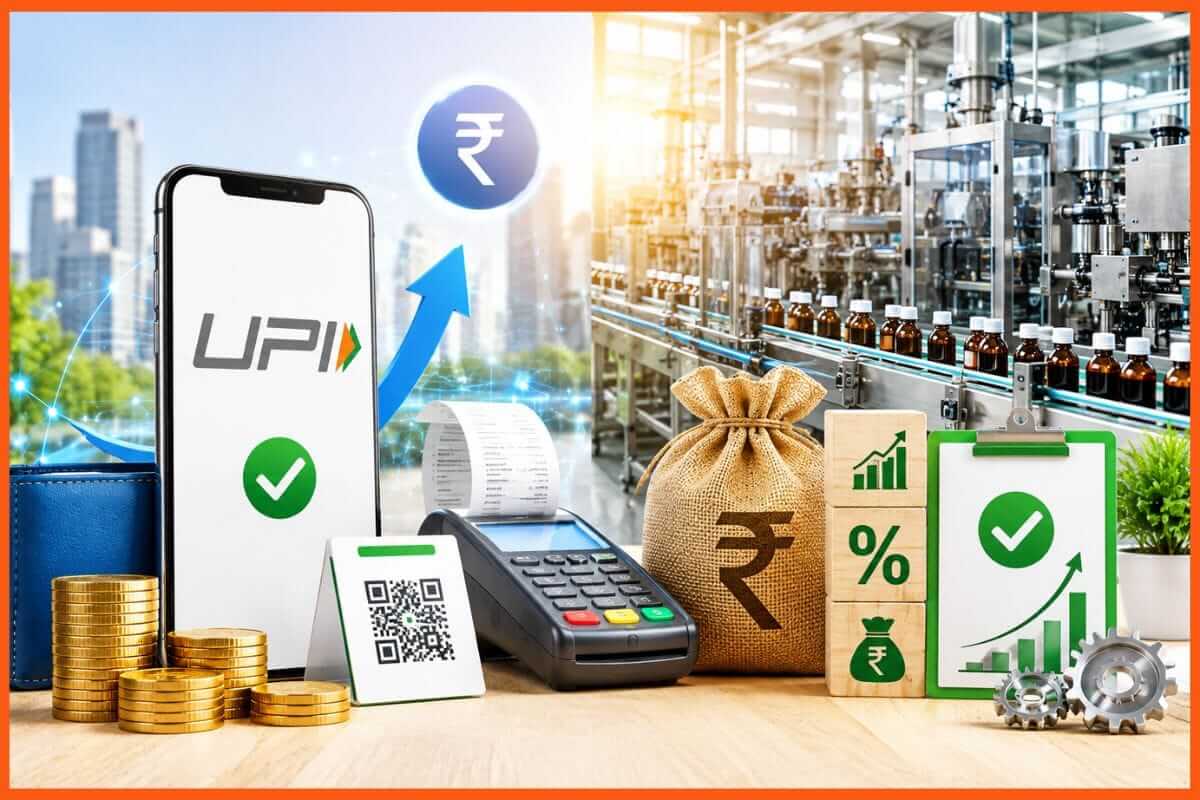
Widespread confusion surrounding UPI charges and taxes has led many people to believe that daily digital payments will now penalize their savings and trigger an immediate stock market crash. In reality, these regulatory updates separate everyday personal payments from commercial processing fees and align capital gains rules without disturbing your daily wallet.
The Real Story Behind UPI Charges and Taxes on Digital Payments
When evaluating UPI charges and taxes, the biggest source of confusion is the new 0.4% Merchant Discount Rate (MDR). Many people fear that buying groceries or transferring money will result in direct deductions from their bank accounts. That is incorrect.
The MDR is an operational handling fee that businesses pay to payment networks—consumers never pay it directly.
| Transaction Type | Amount Threshold | Fee Applied | Who Pays the Fee? |
| Friend & Family Transfers (P2P) | Any amount | 0% (Free) | Nobody |
| Daily Grocery & Local Kirana | Under ₹2,000 | 0% (Free) | Nobody |
| Large Store Purchases (P2M) | Over ₹2,000 | 0.4% (Capped at ₹300) | The Merchant |
| Adding Funds to Broker Apps | Over ₹2,000 | 0.02% (Capped at ₹300) | Broker / AMC |
- Zero cost for personal payments: Transferring money between family members or friends remains completely free, no matter how much you send.
- Neighborhood shops stay protected: Small vendors earning up to ₹1,00,000 per month are exempt from fees under the P2PM merchant framework.
- No checkout surcharges allowed: Merchants cannot add the 0.4% fee to your final receipt. The National Payments Corporation of India (NPCI) prohibits merchants from passing this processing fee to consumers.
How UPI Charges and Taxes Impact Stock Market Investors
Headlines predicting an imminent market collapse point to tax updates and digital transaction rules. However, capital markets are driven by corporate earnings, domestic cash flow, and economic growth rather than small processing fees.
Capital Gains Tax Rules for Stocks and Mutual Funds
Taxes apply only when you sell your investments and book a positive profit. If you keep your money invested, you pay zero tax.
- Short-Term Capital Gains (STCG): Realized profits on equity assets sold within 12 months are taxed at a flat rate of 20%.
- Long-Term Capital Gains (LTCG): Investments held for longer than 12 months receive an annual tax-free profit exemption of up to ₹1.25 Lakh. Any profit above ₹1.25 Lakh is taxed at 12.5%.
- Minimal broker impact: While loading capital onto investment platforms incurs a 0.02% charge, leading discount brokers absorb this cost, meaning your full deposit goes toward purchasing assets.
Review our detailed guide to capital gains tax filing to understand how to declare these transactions accurately on your annual returns.
Long-Term vs. Short-Term Investment Tax Example
Holding your equity investments for more than a year significantly lowers your overall tax obligation:
PROFIT EXAMPLE: SELLING SHARES WITH ₹2,50,000 NET PROFIT
──────────────────────────────────────────────────────────
Option 1: Sold at 6 Months (STCG @ 20%)
• Taxable Amount: ₹2,50,000
• Exemption Limit: ₹0
• Total Tax: ₹50,000

Option 2: Sold at 14 Months (LTCG @ 12.5%)
• Gross Profit: ₹2,50,000
• Tax-Free Exemption: -₹1,25,000
• Taxable Profit: ₹1,25,000
• Total Tax: ₹15,625

Net Savings by Holding Long-Term: ₹34,375
Actionable Tips to Protect Your Wealth
Navigating new UPI charges and taxes requires separating rumors from actual rules. You can optimize your returns with three simple habits:
Verify official policy circulars: When evaluating tax policies, consult verified updates directly from the Income Tax Department rather than relying on viral social media alerts.
Harvest the annual ₹1.25 Lakh profit exemption: Book up to ₹1.25 Lakh in long-term equity profits every fiscal year at 0% tax, then reinvest the capital to increase your purchase price base.
Switch to direct mutual funds: Compare your options using our SIP vs lump sum investment comparison to bypass middleman commissions and keep more of your compounding returns.